Thinking about selling your small farm in Ravena-Selkirk but not sure where to start? You are not alone. Hobby farms ask for different pricing, marketing, and buyer screening than a typical suburban home. In this guide, you will learn exactly what to gather, how to showcase your acreage, what to expect from buyers, and how to move from first consult to a smooth closing. Let’s dive in.
Why Ravena-Selkirk attracts farm buyers
Ravena and the surrounding Selkirk area sit within the Town of Coeymans in Albany County. You benefit from proximity to Capital Region jobs and services while offering space, privacy, and usable land. Many buyers come from Albany, Schenectady, and Troy, with additional interest from adjacent Hudson Valley counties and some weekend or second-home buyers from the NYC metro area.
What does that mean for you? Your most likely buyer values accessible commuting, scenic river valleys, mixed woodlot and tillable acres, and ready-to-use animal or garden infrastructure. Your marketing should make those features easy to see and understand.
Understand rules that shape value
Local rules and land-use constraints can influence where barns sit, how pasture can expand, and which uses are permitted. Before you list, confirm the basics so you can answer buyer questions with confidence.
- Zoning and permits in the Town of Coeymans determine permitted uses, setbacks, minimum lot sizes, and where accessory structures can go. For parcel-specific rules, contact the Town of Coeymans Planning and Zoning Office.
- Agricultural District status can affect assessments and certain municipal restrictions. Verify status with Albany County or the New York State Department of Agriculture and Markets.
- Wetlands, stream buffers, and floodplains matter. Check NYSDEC resources and FEMA flood maps for any regulated areas that limit building or pasture expansion.
- Conservation easements, deed restrictions, or preservation programs reduce development potential and affect value. Pull the deed and county records to confirm.
Utilities and access to document
- Septic and well: Many rural parcels rely on private systems. Buyers expect recent septic inspection records and well water quality tests.
- Road access: Private vs. town- or county-maintained access affects long-term costs and marketability.
- Electric and internet: Note service type, including any three-phase electric and available internet providers, especially for remote workers.
- Taxes and assessments: Provide recent tax bills and any agricultural assessments or exemptions on file.
Gather your documentation
Getting your paperwork in order speeds pricing, reduces buyer friction, and supports a stronger appraisal.
Must-have records checklist
- Deed and current owner names
- Tax parcel ID and last 3 years of tax bills
- Current survey and/or certified boundary map, plus a county GIS parcel map
- Title exceptions or easements (access, conservation, utility)
- Zoning classification and any variances or permits
- Floor plans for the residence and measured barn or garage footprints
- Outbuilding inventory: year built, dimensions, construction type, condition, repairs
- Roof, foundation, structural reports if available
- Septic inspection and maintenance records, approvals or permits
- Well test and water quality report and well yield info
- Utility bills for the last 12 months
- Soil test results and pasture notes if you grow crops or manage hay fields
- Hay storage capacity and last year’s yields if applicable
- Business income records if you plan to market farm income
- Aerial imagery or drone files if you have them
- Any environmental notices or DEC correspondence
Farm details that inform value
- Breakdown of acres: tillable, pasture, woodland, wetlands, and nonusable
- Usable pasture acres and approximate linear feet of fencing
- Stall counts, arena dimensions, tack and hay storage capacity
- Replacement costs for barns, fencing, and arenas
- Any income or cost-savings components, such as firewood sales or hay produced for your own use
- Known encumbrances that limit use, such as easements or covenants
Pricing small farms the right way
Most rural appraisals use a Sales Comparison Approach, with Cost Approach adjustments for unique improvements like barns, arenas, or extensive fencing. If the property produces meaningful income, an income approach can apply, though it is less common for small hobby farms.
Two points matter most when setting a price in Ravena-Selkirk:
- Usable acreage often matters more than total acreage. Buyers focus on functional pasture, access, fencing, and water.
- The quality and condition of improvements can drive value. A well-drained arena, reliable watering system, and sound barns can command a premium.
You will want a data-driven broker pricing opinion built on rural comps. If financing is likely, a formal appraisal can help set expectations. When comps are thin, expand the search radius or time frame and adjust for market trends.
What to measure on your acreage
- Exact acreage by use type: pasture vs. woodlot vs. wetlands
- Fenced pasture count, acreage, and approximate fence length
- Water sources: well, stream, springs, ponds, and watering systems
- Equipment access routes, gates, and turnarounds for hay delivery and trailers
Feature-forward marketing that sells land
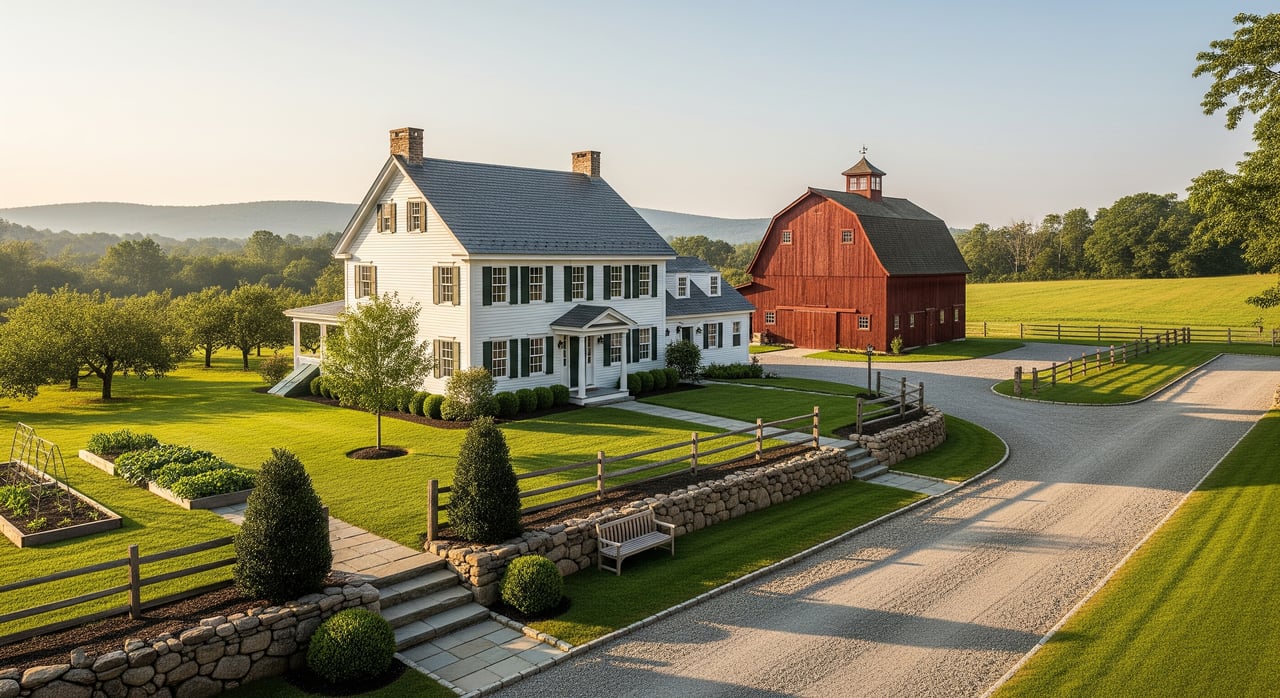
Your buyer wants to see how the land works. Clear visuals and accurate captions help them picture daily use before they ever set foot on the property.
High-impact deliverables
- Aerial photos and video: Overhead shots that show the full parcel, road access, and building cluster. Add boundary overlays and a north arrow to orient viewers. Capture sunrise or sunset if views are a selling point.
- Ground-level photography: House exterior and key living spaces, plus detailed shots of barns, stalls, tack rooms, hay lofts, feed storage, fenced runs, water features, gates, and driveway condition.
- Short video tour: A 2 to 4 minute narrated highlight that walks through fencing, topography, water, barns, and key functions.
- Maps and floor plans: Current survey or scaled parcel map, simple lot-use diagram, house floor plans, and barn footprints.
- Interactive assets: A GIS parcel download, topo overlay, and a simple usable-acres infographic. Offer a virtual tour for remote buyers.
- Accurate captions: Include exact acreage, number and size of fenced pastures, stall counts, arena dimensions, hay storage capacity, well and septic details, and permitted uses per zoning.
Photography best practices
- Use spring or summer photography to show green pasture. If listing off-season, blend seasons or update images as the landscape changes.
- Remove clutter and hazardous items from barns and shops. Present clean, functional spaces.
- Highlight functionality: gates open, clear access paths, and equipment storage visible.
- Prepare a downloadable data packet for serious buyers with your documentation summary and key facts.
Where your buyers are
To reach the right audience, cast a targeted net:
- MLS with farm-specific keywords and a robust photo and video set
- Farm and land marketplaces suitable for rural parcels
- Equine-specific and small livestock channels for horse-focused buyers
- Local and regional channels, including community newsletters and classifieds
- Targeted outreach to equestrian clubs, local hay suppliers, ag supply stores, and extension office mailing lists
- Email campaigns to segmented buyer lists, such as equine, small livestock, homesteader, or weekender segments
Smart buyer screening for hobby farms
The best offers come from buyers who can both finance the property and use it as intended.
Financial screening
- Require a pre-approval letter or proof of funds before showings. Rural lending can be more complex with acreage and outbuildings.
- USDA Rural Development loans sometimes apply to eligible rural properties. Buyers must check location and income eligibility.
- Conventional and FHA lenders may ask for additional documentation if any agricultural business is present.
- Cash buyers and portfolio lenders are common when appraisal comparables are limited.
Be ready to explain how acreage and improvements factor into appraisal. Provide usable-acreage data, barn specs, and rural comps to help appraisers and lenders.
Operational fit
Have a short questionnaire ready. Ask about intended uses, such as horses, small livestock, orchard, hobby crops, or simply privacy. For equestrian buyers, clarify arena footing and drainage, stall sizes, turnout options, and access for veterinarian and farrier services. For livestock-focused buyers, discuss manure management and any local restrictions on animal density.
Showings, biosecurity, and safety
Limit animal contact during showings, provide boot covers if needed, and keep livestock secured. Do not permit unaccompanied access to barns or pastures. Share your data packet with qualified buyers so they can evaluate systems without unnecessary on-site disruption.
Inspections, contingencies, and insurance
Expect more than a standard home inspection. Rural buyers often add:
- Barn or structure inspection for roofs, posts, foundations, flooring, and ventilation
- Fencing inspection focused on safety and condition
- Well water testing and a review of well flow rate
- Septic inspection and maintenance history
- Soil testing for planned gardening or crop use
- Environmental review if wetlands or prior industrial or agricultural uses are present
Buyers should check farm liability or equine liability insurance options. Sellers should disclose known hazards and past incidents. There are New York seller disclosure requirements, so consult a real estate attorney about the property condition disclosure for your situation.
Timeline and logistics
Rural transactions often require more time for lender appraisals and specialized inspections. Build in buffer time when you set your closing date. If equipment or livestock will convey, include a written inventory and bill of sale terms. Decide early whether you plan an as-is sale or will consider repairs or credits.
Your step-by-step listing plan
- Pre-listing audit: gather documents, order well and septic tests, and confirm survey details.
- Broker pricing and comparative analysis focused on usable acreage and improvement quality.
- Professional photography: drone, ground, and creation of a clean data packet.
- Targeted launch: MLS plus farm-specific channels and outreach to buyer networks.
- Rigid buyer pre-screening: pre-approval and an intended-use questionnaire.
- Manage inspections and negotiate repairs or credits as needed.
- Close with a detailed transfer of the inventory list and any farm business records you plan to include.
Quick seasonal prep
- Peak marketing months run from late spring through early fall, when pastures are green and land reads well in photos.
- If you must list in winter, emphasize plowed access, safe parking and turnarounds, and winterized water systems. Plan to refresh visuals with spring imagery to keep the listing competitive.
Ready to list? Let’s talk
If you want a clear, no-pressure roadmap tailored to your parcel, you will get it here. I pair agricultural know-how with polished marketing to tell the full story of your land, then screen buyers to protect your time and goals. When you are ready, let’s review your documents, shape a pricing strategy, and build a feature-forward launch plan that attracts the right offers. Connect with Elizabeth Ellers to schedule your free land and home valuation consultation.
FAQs
What documents should I gather before listing a hobby farm in Ravena-Selkirk?
- Collect deed, tax parcel ID and recent tax bills, survey or boundary map, zoning and permits, outbuilding inventory, septic and well records, utility bills, soil tests, aerials, and any easements or conservation records.
How do appraisers value acreage and barns on small farms?
- They primarily use the Sales Comparison Approach, with Cost Approach adjustments for unique improvements; usable acreage and improvement quality often weigh more than total acreage.
Which inspections should I expect for wells and septic in Albany County?
- Plan for a well water quality test and flow rate review plus a septic inspection with maintenance history; many buyers also add barn and fencing inspections.
Can my Ravena-Selkirk property qualify for USDA Rural Development financing?
- Some eligible rural properties can qualify depending on location and buyer income; buyers should confirm program eligibility and lender requirements early.
How should I handle selling tractors, equipment, or livestock with the property?
- Prepare a written inventory, state which items convey, and add clear bill-of-sale terms in the purchase agreement to avoid last-minute confusion.
When is the best season to photograph and list a hobby farm in Coeymans?
- Late spring through early fall showcases green pasture and land features best; if you list in winter, update with spring imagery to keep the listing fresh.